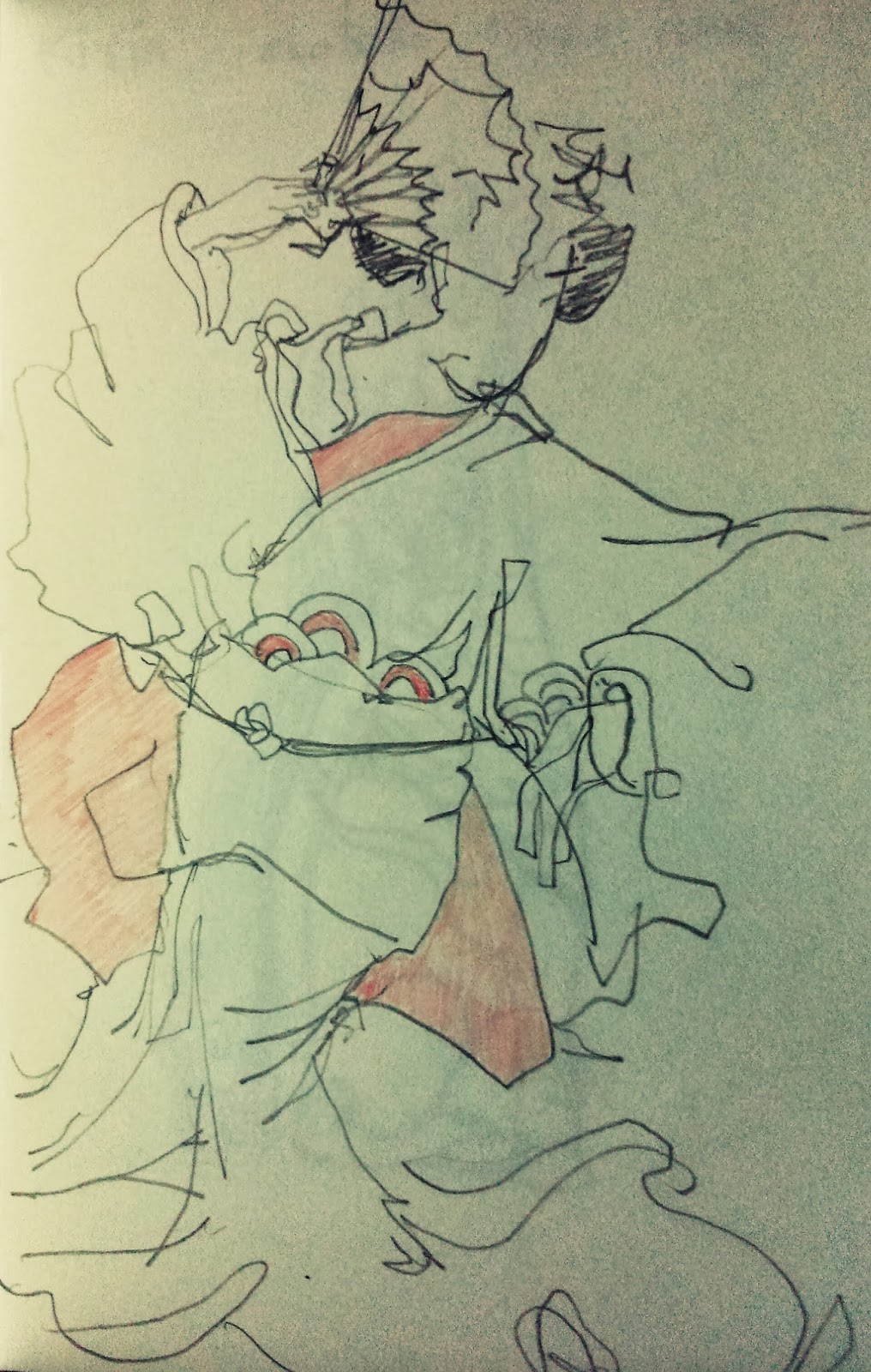
Tuesday, February 7, 2012

across the room

2 am
slumber trucks moan
white wash sprinkles
and lands on me like
lazy snowflakes

on the next bed
sleeps a girl
she came to me
two weeks ago.

her gentle breathing
is tense
she could be dreaming
perhaps

but sitting across the room
at 2 am
i am searching for a way
to find out.

Monday, September 26, 2011

Finger prints and soggy letters

It feels surreal that time can be compacted through mental space despite physical distances. You wake up in Delhi and go to bed in Mumbai. Its been a year, it feels like ages, yet it feels like just yesterday , that I was here. The city seems to have turned timeless, like a constant frame through which people come and go like ants. The heart of Mumbai lies in the contrived domestic space which becomes the starting point for extrusions and explosions , that make the outside of the city the site of such an infusion of energy.

The Gateway lies desolate. It doesn’t hog the light it deserves. Somehow, it seems like its grown aged and no longer interested in bearing mast for its city. The swarms of middle class Sunday crowd seem parasitic to the place. Each little world, a closed decadent cuccoon, trapped within the boundaries of the camera lens, which seems to be the sole witness and jury to the fact of their existence.They try to break free by riding on silver painted neon lit horse carriages. Try to escape the ground that they are so wary of, yet, the ride is momentary in its effect. The horses always bring them back to the same point where they started.

She gets lost in the city. Her feet always need to move. Never on a standstill, they are automatically drawn towards the sea. Marine drive is Mumbai’s threshold into dreamspace. It marks an edge to a human constrained living and an extended threshold into the infinite sea beyond. It is the stage where the city distances itself from you and offers itself for your insatiate gaze. The urban proscenium sells the city to its customers who come willingly to be hypnotized by this edge.

Shards of memory are strewn all over the city like little horcruxes. Figments of images, clinging onto crumbling concrete. The cellotaped apartments , seem to have lost the will to renew. The concrete dark and old , weeps and cries all over the suburbs. The patched up cracks on the dilapidated apartments grow like algae, like ugly magnifications of the dark thorns tucked within the minds of the domestic beings within.

I find myself taller, larger. The city is a child, looking up at me , tugging at the hem of my shirt,leaving behind grimy finger prints and soggy letters.

Mumbai, August 2011

Monday, September 12, 2011

Remembering My dearest Ajju


( I am reposting this writeup i had written two years ago , having added a few more memories to the picture. Happy Birthday to my dearest Ajju ) That afternoon comes back to me , when I went and sat by him on his bed and had a nap in his lap as his soft wrinkled hands patted my head. That vacation , I had got my walkman player, and Ajju’s favourite Marathi natya sangeeth cassettes, which he used to listen to , from earphones. Every time, the earphone fell out of an ear, he used to call out, ‘Gonti!..” and I used to run to him and plug him back into his musical world. This was the first vacation I was spending in Gokarna alone. Having waved goodbye to papa , who left me with dear little grandma and grandpa, tears streamed down my eyes, as we sat in the verandah and darkness fell. Ajju would love listening to bhajans I sang. My voice choked as I sang ‘dehi dehi sharade, gnyaanam dehi sarvade’, but soon it was fine, and I no longer felt frightened. Except now and then, when I came across a dark threatening corner or lightless room in the vast house, especially after sunset. I had never felt happier to greet the morning and the sun, as I did then.
It was the last vacation I could spend with Ajju, because, on the November 14th early at two in the morning, we all had to say goodbye to Ajju. That year we (the family) stayed back after the funeral ceremonies , during karthik poornima. And we went to the Deepotsava that happens every year in the Kotiteertha, the sacred tank.

It was magical as hundreds of lamps reflected in the water along with a bright moon who seemed lost in all the celebration, and fireworks lit up the sky effusive with joy. It seemed a fitting goodbye to our dear grandpa. Last week, when I was back in Gokarna on my usual visit, I stayed back an extra day hoping to catch the Deepotsava on karthik poornima. But it is never like that first time, is it? However hard one tries to re-live past moments, it is never the same. Each time is a new time.

When I was there this time , I dug into the shelf in the study, which was full of books ( as is any shelf in our house) ; but this one almirah had a special taboo attached to it. Once long ago, I had ventured to open this very cupboard, and to my horror, there a was a tiny rat inside which ran right up my arm and jumping off my shoulder, scurried away victoriously! I was in a state of hysteria , as I ran and locked myself in my room and refused to come out , till the maid came and consoled me saying that she had taken care of it and it was safe to come out now. Later , the poor creature was a subject of my sympathy and I even wrote a small verse on it.

So, well, after mustering courage , I opened it this time . Happy to see no moving tails or black beings inside. I found a whole range of books on culture, Leninism, Marxism, and the likes, which were from the local library. And each of them had markings in pencil , made by Ajju when he found certain passages or points which were notable. And after long I felt I was in touch with him. I was reading the same passages, that he had read many years ago, and wondering what thoughts must have arisen in his mind then. The very awareness of this idea gave me an immense sense of peace. The signs one leaves behind, signs that remind us of a healthy living thinking mind, signs that give you solace when you need it, signs that give hope when you are in despair. Finding those books, inspired a new zeal , a new feeling of awareness and a bright feeling of joy at the very prospect of discovering things that are waiting to be .

One summer vacation , we had a digital camcorder with us. So I decided to record an interview with Ajju. I was in the sixth grade, a shy girl who wouldn’t talk. So , my father prompted me . I reluctantly asked . The question was ‘Do you still think there is no God?’ and I vaguely remember him giving an amused smile. I was amused at the unlikely moment , as these words tumbled out of my mouth, although fed by my father; perhaps, his curiosity found a voice in me. For me, then, Ajju came closest to the divine. And with his presence, there was always a ubiquitous sense of spiritual stability. He would sit out there on his easy chair, in the verandah and absorb us into him. More than a few times, with us children playing cricket in the courtyard, hitting bouncers now and then, he sportingly absorbed and ducked away tennis balls, too , which would bounce across his easy chair!

I hear him tapping my head with his tender frail hands , slender long fingers, saying ‘gontipor toh’ ( ‘that’s my little gonti’) , and tapping on the harmonium keys with nonchalant confidence. I hear his stories in his grainy voice. Every afternoon, I would sit adamantly in front of him , sinking into one of the easy chairs , my legs and hands dangling out like crab limbs, and waiting for him to start. And he would start, ‘Once upon a time , there was a king ( a raaaya )..’ ; always a raaya , with the occasional fisherman or farmer He was like a perennial fountain of stories for me. From him , I knew why the sea was salty, because a princess in some faraway castle had cried her heart out and her tears had turned into the ocean.

He would tell me to concentrate only on the subjects I like in school, saying the rest will take care of themselves. Once, he had told me how minds are like good conductors and bad conductors, some minds take time to grasp knowledge, but have a great capacity to retain once learnt, while some others grasp quickly but let go of the knowledge as quickly. And that had put me into a very troubled state of dilemma , later that day , as to which kind I belonged to.

I have memories of him walking up and down our front yard , in our old house , which still had its katanjan ( wooden trellises) and the tiled roof that let into the mysteriously dark kitchen a snatch of a morning ray through a glazed gap. Up and down the frontyard smelling of freshly shining cowdung, he walked, his walking stick, making a graceful gate of tip tap , in tune with his feet. This was when he no longer went out to the beach to take his legendary walking trail all the way up to Rudrapaada. I have heard from people, he would walk for phenomenal distances; he would walk everywhere, and that he would walk and read a book in his hand at the same time! I like to think that I’ve got the taste of walking and reading from him.

Another random summer memory is when we had just reached Gokarna after a long bus journey from Mumbai( since we lived there then). My brother and me were very small. Before entering the house, we spotted Pashupathi, the neighbourhood boy, who was few years elder to my brother and his good friend, sitting on the katte next door. Excitedly , my brother waved and greeted him. Instead, Pashupathi just turned his back to us and went into his house. That perplexed me and my brother. Like an offended pampered child, I went and told this to Ajju. Instead of consoling me, he asked me to be patient, and give the boy some time to come around. We had come from the city, and maybe he felt left out seeing us. I hadn’t quite understood, why, Ajju had taken his side then. Now looking back, I see. Every time, we ‘city kids’ , hopped in for vacationing, there would be a phase of diffidence that Pashupathi, would be overcome with , perhaps arising from the fact that he lived in a small town. And then, after a few days, once he sensed that nothing had changed, and we were all still the same, he would get back to playing with us like usual. I feel grateful that Ajju took his side, that day. Pashupathi has grown up now, and comes everyday to our house to read the morning newspaper and now and then teach my grandma how to press the numbers in her mobile phone.

All the letters he wrote to us, me and my brother, are safe with me . Spontaneous limericks on us and advise on how we should read a lot , learn music, not fight, study well, and not worry much about subjects I dint like. In every letter, he never failed to say a little sorry for his handwriting, which he considered illegible. His handwriting in fact was like a mysterious codec to me , evolving in its own speed and design to become a script that could be read by a select few. Now I see my father’s writing follows the same trend. The explanation he gives is that the mind thinks faster than the hand’s capacity to catch up.

I have known my grandfather as a grand daughter , but there is also the need to know him completely through his mind, through his ideas, through his writings. He seems an ocean. I am yet to learn to swim so I could delve into it. Remembering and missing my dearest Ajju , as he completes a hundred years of multitude.


Saturday, August 13, 2011

Ilkal reverie (contd..)

I ascend the Badami cave cluster in awe, confronted by the overwhelming rock faces flanking the steep uphill path. Cave number one, almost on the sly, slides in front of my eyes the charming and oblivious dancing Shiva. Shiva with his eighteen arms , creating a halo of rhythm around him, with his waist sveltely tilted into a Tribhangi dancing to his own music ( therefore called Natesha ) seems to be gazing into infinity. Though human in scale, his upright chin automatically turns the gazing mortal into a reverent onlooker.

The Badami rock cut monuments are a mix of Shaivite , Vaishnavite, Jain and Buddhist cave shrines. One grapples with the seductive and vibrant imagery of Shiva and his consort Parvati in one cave, while the next is subtle and restrained in its depictions of the ensemble of the Vaishnavite family with all his avatars and their amusing tales. While Varaha cant stop gazing at Bhoodevi, the damsel he has just rescued from distress, a stubborn and stout Trivikrama , acrobatically conquers the three lokas with his exaggeratedly raised leg. Vishnu resting on his serpant bed , with uncut finger nails , looks despondent without his consort Lakshmi around to massage his feet. Meanwhile the shrines in the shadowed depths of these caves, lie empty and bare, haunted with an absence of human touch, now that the shrine image probably, lies in the timeless vacuum of some decrepit museum a hundred miles away.

The sinuous and resplendent life of these caves lies in the myriad accomplice figures around the main images. The gandharvas , the mithunas, the gaNas , the mythical ani-morphs , the glimpses of wall paintings inside the caves , enforce the space with both , a historicity , and a mythical timelessness , that turn these caves into a phantasmagoria.

Chalukyan damsels in their most vulnerable and endearing moments, adorn the brackets of the pillared verandah of the caves. Their towering head gear seems to balance out their weightless and fragile waists , yet their slender long legs seem to carry them with a diva like elegance. While these damsels are lost in their solitary self-consumed indulgences, the mithuna couples on the other hand , revel in subtle moments of each other’s companionship. While one tries to help an inebriated lady to her feet, another stands firm and couth, allowing his lady to rest herself completely on his arms. They seem to be the ultimate ideal image of companionship and would perhaps seem incomplete without each other’s vulnerable presence. What is other worldly about them is that despite each other’s proximity, their gazes never meet. They seem to look beyond each other, into spatial and thoughtful tangents, and thereby never seem to materialize the moment into a mortal image by looking directly into each other’s eyes.

This amorous life of the bracket world aloft makes one raise his head in dreamy awe and look up at this mythical magic world like a child being told enticing stories. While the comical dwarves , the gaNas , add frivolity and a sense of festive celebration to the imagery, the alert and wide eyed mythical stags , antelopes and leogryphs on the brackets , brighten the narrative of the caves with an element of magic.

The warm red sandstone glistens under human touch. Rain and the wind seem to seek refuge from themselves amidst the deep shadows of these caves. Little girls in red ribbons manage to reach out and just about touch the navel of the dancing Shiva , as he has no choice but oblige to the soft inquisitive hands. The sweeper lady , rests her broom next to the Dwarpala’s trident , wiping her brow with the crimson border of her Ilkal saree. The idle guide sits resting his back against a pillar in one of the caves’ verandahs, placing his handkerchief on the floor so that his crisp white pant doesn’t get soiled. He takes a moment to look up at the Chalukyan damsel, and his mind rewinds to a hazy image of that shy girl in school, who always used to sit next to the window in the classroom, tying and untying her braided hair. His reverie is broken. A car honks in the distance as a family trickles out for yet another historic rendezvous with Badami. He is up on his feet , ready for his next round.

Stories are always waiting to be told.

Stones speak.

All you have to do is listen.

Friday, July 22, 2011

Ilkal reverie

When your eyes wake up to grey skies sifting a melancholic whiff in the air, and the air smells of familiar strangers, is that how journeys begin?

A watercolor landscape greets me. The painter must have left his wet brushes on the fields. I’m in the land of black soil, where trees are rare and sharp like unshaven bristles. As my morning begins in company of these bearded fields, I sense the air of a masculine landscape.

A land which amuses you pleasantly with the sight of men, and not the women, carting pots of water home from the nearest water hole; plastic , fluorescent green yellow orange pots. The infusion of colour by these pots is electric. The Ilkal woman tinges the masculinity of the land with her robust frame. Her gait is sturdy, her saree pallu drawn confidently over her head and the deep vermillion borders of the drape defining the energetic feminine in the rural landscape.

Not far behind though are the bulls. The bulls with their colourfully decorated horns, seem like an integral life force of the homes. Desi bred and lean in frame , they strut their stuff with pencil points of horns adorned with delicately pointed bronze caps and flashy ribbons flying from their tips, just like the flying scarf of the typical Bollywood heroine of the 60’s ,as she rides her bicycle. Their eyes are wise, deep and intent on talking. Every village I pass by, I learn a new secret from these bulls. A bull from the last town just told me how bad the lady of his house cooks. The bull beside the town’s temple square is eaves dropping on the old men who sit under the peepal tree to discuss their domestic woes. Quite distinctly, the Aihole bulls have an archaic gait, their eyes scanning the tourists in a been-there-done-that manner.

The houses resembling the Maharashtrian vernacular style , complete the idyllic setting of the Indian rural landscape . With front pillared porticoes where tired farmers rest on sultry afternoons, the squarish frames of these houses, punctured with miniature windows ( so small that they seem elusive as if not letting through untold secrets)make for an elevational landscape. The barren dark North Karnataka land comes to life through little spurts of intense lively colours , in turbans, baskets , pots and decorated bullocks. Beautiful little exotic birds of assorted shades, light up the electric lines along the road to Aihole. Perched on electric lines, these birds seem to have embraced the lines of industry into the countryside with nonchalance. Makes me wonder how these electric lines have been naturalized into the green by the birds.

The soil changes shades and hues as the road takes new turns and bends. I wonder what is that point on land when the soil decides that it’s time to change its nature? Why do I always never find that line of transition? From black to grey to brown to red to black again, the soil has quite some mood swings in this part of the country.

Shor in the city has turned into melody outside of it. The landscape makes music change colours too. The road turns into a dreamline, where songs move in and out of the reveries one is lost in as one sees his/her own reflections in the window pane, mingle with the world passing by.

The highway has trucks , many form Himachal Pradesh and Haryana. Colorful and confused they seem to be in a hurry to run away from this setup. Each truck , a capsule of the what the middle class stands, carrying , pots and pans, fridges and washing machines, microwaves and double beds, almirahs with full lengths mirrors and little teacups wrapped in the previous month’s Times of India. Like closed chapters of the middle class , they move away from sight, like missiles sent into oblivion by their families; an attempt at erasure from present, an attempt to write a new future.

The aging stones of Aihole and Pattadkallu glisten in the first rains of a rare monsoon. The wet stone glistens gleefully as Chalukyan damsels bend forth to set right their hairpins in the mirrors of the rain water puddles on the sills of the rock temples.

Badami has caves , monkeys and unassuming majesty. That evening spent at Agasthyateertha is a moment paused and captured in my mind frame. The large pond edged with the mass of caved rocky outcrop is overlooked by a temple named Bhootnath and receding steps edging the other side.

The heavy skies finally spill over. The onset of rain begins with the rich green water of the lake shivering in goosepimples as it is caressed by the drizzle. Rippling seductively in the breeze , the lake flirts amorously with the rain. Looming large , watching over , are solitary sturdy boulders.

The space enshrines vast expanses and sudden silences. It embraces and lets go in one breath. To get to this vastness , however , I have to wind through small lanes of the town where homes huddle close to each other as if to re-assure each other of their presence ; each home with a door , each door like a frame, framing the lady of the house in her Ilkal saree pulled over her head and gazing out at the outside world from within her secure shelter. There is a direct connect between the lane and the home . Badami has the warmth of a heartfelt conversation.

Sheltered under the aging stones of the Bhootnath temple, it is an eternal moment watching the rain fall on the water around me . My thoughts are adrift , caught in the winds, sheltered under rocky shadows , gazing at the water dripping from the wet rocky ledges into the pool that has formed on the stone sill. In the distance, monkeys chatter. Little umbrellas are no match for this symphonic romance between sky and earth.

And out of this magical evening, emerges a small cotton wisp, floating down along the edge of the high overlooking cliff. The sky has decided to take the leap, to plunge forth , only to be lifted up by an unbearable lightness of the free fall. It is the birth of the waterfall. Slow and steady it trickles down, soon, growing into a robust fall. The ‘MeN basadi’ ( wax town) is finally melting in the monsoon mélange.

As it rains , the mithuna couples up in the caves are lost in each others’ eyes . Huddled in the assurance of the stone around them , they shiver as the rain water seeps up into their embrace, infusing a renewed romance into their eternal moment.

Aihole, Pattadakallu, Badami , Bijapura

june 27th , 2011.

Tuesday, May 31, 2011

Between friends and enemy , the stranger...


Wriggly toes,
My feet in warm sand
I find a stranger’s trail

Footsteps, keen and deep,
Etched with moist tears of the sea ,
Glass bottles and mossy bread crumbs.
I walk by this new absence.
The feet seem large,
But the strides match.

Not for long.
Between friends and enemy
The stranger.
The waves have claimed
A momentary companion.
They’ve spared me.

Maybe next time,
I will follow.

Saturday, May 7, 2011

One bus ride away...


Amongst eclectic travelers , I have a ticket to ride to the land of the Lama , to get my first glimpse of snow peaks. Behind me two foreigners introduce themselves as writers , amidst talks of meditation, vipasana, teaching village children and discovering India. In front of me, a boy and a girl are lost in each other’s eyes, as a red Ferrari cap keeps juggling off his head to hers. On my side, a group of four students probably doing their Phd’s from JNU , are discussing some ecological policy issues, while somewhere at the back, an old retired army man with his wife are on visiting rounds.

At day break, the pahadi landscape is dotted with red turrets of devi mandirs, sparrows and monkeys, softened white pebble beds and streams, as the bus winds up hills to Dharamshala. The bus to Naddi, is all orange inside. The driver has light eyes and sharp Afghan features, and waits long enough to fill the little bus to the brim before taking off. Among towering boys and homely women, a little schoolgirl climbs in. It is tragic that she has to go to school in a bus filled with holidaying tourists. She has navy blue ribbons in her double braided hair and a look of breathless anxiety on her face. She is tossed and shuffled around near the engine seat of the driver, by huge women in matching knitted sweaters and thick spectacles. She coyly gives in, making place for all the big people around her. She steadily and passively scans every being on the bus, till she has to get off at her stop. I realize that the big women around her, are her teachers, who also get off and make their way to the local school where the bell is just about to ring. As I see winding uphill pathways, I am reminded of Kiarostami’s landscape in ‘Where is my friend’s home?’. Now and then the hills peep out and register their greetings.

Three streets and a junction make up Mcleodganj, the buzz town near Dharamshala. The place does not claim any paths to enlightenment. It seems to have very plainly and readily accepted its role as a hustle zone for spiritual wanderers, searchers and tourists. Its economy is from the traveler. The cafes, food joints, cake shops, and souvenir stalls lining the streets, with wrinkled Tibetan faces, wanderlust hipsters, and maroon clad monks and nuns, turn Little Lhasa into a colorful feluda of textures.

Dalai Lama seems to like yellow windows. The Tantric Buddhas around me effuse with colourful energy, emotion and colour. They are at the same time grotesque and enticing. Twenty one Green Taras stare at you like seductresses beyond your power. The intricate lines from the wall paintings have a life of their own, as a bunch of high school children on excursion, fill the space with their giggles and happy chatter.

The shingles on the roofs of the houses, here, shine and glimmer in the sun, just like the snow peaks in the light of dusk. The flat slabs lie on top of each other ever so re-assuringly and with a confidence that they won’t slide down. They are now a cheerful grey, now a greenish blue, now a dull hue , just like the moods of a day. The Bhagsunag waterfall is a little more than a trickle. The rocks are spotted with maroon, as monks have a little time out in the name of a water ritual.

That evening there is a candle light march, as the monks set out in circles around the main square, in protest of the arrest of fellow Tibetan monks. It is a moment of mixed feelings. One can’t help but feel a certain sense of helplessness and uncertainty, a sad sense of calm in their faces. Suddenly their place in the big scheme of things makes this scene seem a vain moment. They seem too tiny, too fragile, too transient before the mountains looming large all around them. The timelessness of the landscape seems to mute and evaporate the tangible voices of the valley.

Meanwhile, the US president Barrack Obama claims the death of the most powerful threat to the world, Osama, and thereby, turns the world into a spectator of yet another ridiculous unrealistically real event. The glimpses I catch of the ‘world’, now and then, on television screens, in cafes and antique handicraft shops, put my mind in a haze of confusion. So many different worlds existing side by side, parallel, tangentially, intersecting only at moments like these, yet never really part of each other, the conundrum that so many clashing realms could produce, makes me want to retreat into my shell, close my doors certain worlds, and open certain select windows. But one cannot sit in a one windowed closet for long. The breeze has to cross through, and doors have all to be opened before long. Otherwise, the sound of the silence inside can turn more lethal than noise itself.

There is a certain morose joy in the way the people wrap up their shops at sundown. The hustle of the day slowly dies to a deafening silence of abandonment. Few cafes are still abuzz with picture perfect characters , who seem to have been sitting in the same chair reading the same page of the same book since morning, having become subjects of many trigger happy tourist with cameras.

I am an outsider to this place, and I make no attempts at appropriation. I cannot turn the monks into subjects of characterization. They seem to represent a unified whole, embodying a unanimous sentiment and voice. I promise many of the shopkeepers, that I would return the tomorrow, but, then I will never really find my way back to them tomorrow.

Under my new found mango umbrella, I find a new found embrace, a warm hug on a chilly day. By the third day the auto drivers, the bus drivers, the café owners have turned into known faces and names. Waiting at the bus stop for the Naddi bus, I see an old Tibetan woman with her grandson. The boy has a green toy truck in his hands and the grandmother seems lost in him, carrying him around her shoulders and waving at the grandfather who is waiting at the bus stop. I decide to get myself a Tibetan dress stitched, the next time I come here.

Naddi is like the little village from Majidi’s ‘The Color of Paradise’ . The hills look lofty from here. They beckon ever more strongly. Sipping on hot chai, I serenade the peaks, scale the slopes with my eyes and in two hours, mentally scour the whole range. Sitting on the road side curb, watching people turn into vanishing dots, an sense of power assumes you, the high point providing me a panoptical position.

On a lazy afternoon , lying under tall cedars and pine trees, I drift into a reveries and float with an ‘unbearable lightness of being’. The afternoon is unreal. Time seems to have gone amiss. Yellow petals ring with unsung notes of silent hills.

The lightness will soon need an anchor.

Sooner or later, there will always be a bus waiting to take you away.


Dharamshala/Mcleodganj/Satobari . May5th 2011.